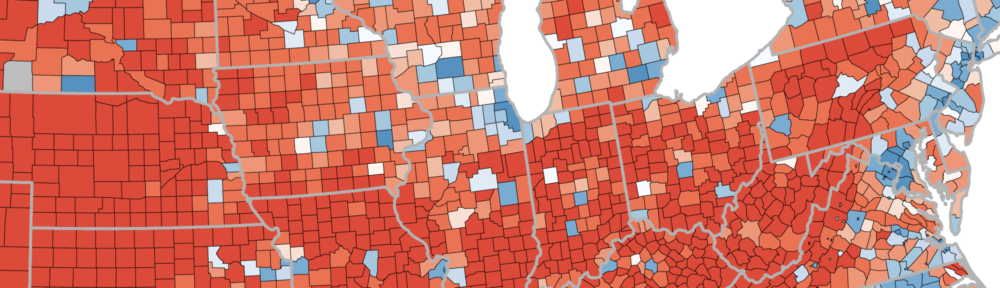
This is the 2nd GOP retirement in a competitive Assembly seat
State Rep Jessie Rodriguez announced May 7 that she will not seek reelection in November. She is the 9th Republican and 12th member of the assembly to not seek reelection. The three Democrats not returning are all seeking higher office, two for the state senate and one for governor.
Rodriguez, who was born in El Salvador, was first elected in a 2013 special election, winning reelection each cycle since 2014.
While most retiring Republicans are from rather safe districts, Rodriguez was seen as a top race for Democrats seeking to flip the Assembly majority. Republicans currently hold 54 of 99 seats, leaving Democrats looking for a net 5 seat pickup.
Members not seeking reelection are shown in the table below. Rodriguez won the 21st district by 930 votes in 2024, a 2.8 percentage point margin. At the same time, Kamala Harris won the district by 4 points. Democrats also won the district 2022 for both governor and U.S. Senate. (The past votes are calculated for the current district boundaries following redistricting in 2024.)
In the current boundaries, the district has consistently voted Democratic in statewide races since 2018, with Republican wins or extremely close Democratic wins from 2012-2016. Rodriguez’s win in 2024 stands out against a string of blue.
A visual look at these votes over time makes it clear how the district has evolved from somewhat Republican leaning to the recent strong Democratic performance.
The 21st sits on the south side of Milwaukee county, a traditionally more conservative area relative to the county.
Demographically the district is predominantly white with a significant Hispanic population, 16%, which is double the state’s percentage, and a small Black population. It has slightly more college graduates, 36%, than the state as a whole, 33%. Median income is about $10,000 above the statewide income.
As a now open seat, this should be one of the most closely competitive districts and a pickup opportunity for Democrats.
Liberal Chris Taylor sweeps conservative Maria Lazar in Supreme Court race
In Wisconsin we have the historically crucial and very red WOW counties (Washington, Ozaukee, Waukesha) and the usually competitive BOW (Brown, Outagamie, Winnebago) and Lake Superior’s blue BAD (Bayfield, Ashland, Douglas) counties. This morning, add one more mnemonic trio.
In 2024, Donald Trump won 34 of 72 Wisconsin counties with 60% or more. On April 7th, 2026, the conservative Supreme Court candidate won only 3 counties by 60% or more: Washington, Taylor, Florence. The WTF counties.
The liberal candidate swept the BAD counties with over 60% in each, and all three BOW counties with 57%, 58% & 60% respectively. And the WOW counties split with 62% for the conservative in Washington (the highest in the state), 54% in Waukesha (a historically low share) while the liberal carried Ozaukee with 52% (Trump got 54% there in 2024.)
True to expectations, the liberal candidate dominated the MD counties (dare I call them DOC counties?) of Milwaukee and Dane with 76% and 84%. Together those two counties also provided 26% of the total statewide vote.
It all adds up to a 60.1% to 39.8% win for liberal Chris Taylor over conservative Maria Lazar, doubling the liberal margins seen in each of the previous three Court elections, which themselves were considered large margins in highly competitive Wisconsin.
Results are unofficial but nearly complete.
You can remember me from my mnemonic: PAV, PollsAndVotes.
Democrats must virtually run the table of competitive races to win a majority of seats
The redistricting of 2024 created a more competitive landscape for Wisconsin Democrats in the state Assembly. However, Republicans held on to the majority in 2024, winning 54 seats to 45 for Democrats. Prior to redistricting, in 2022 Republicans held 64 seats to 35 for Democrats. The ten seat swing has put the chamber in competitive territory for the first time since 2010, but Democrats must pick up five more seats to take the majority. To do that they must virtually run the table of competitive races.
The 2024 district lines, drawn from a plan of Democratic Gov. Tony Evers, made substantial changes to the 2022 lines, which were in turn very similar to the 2011 map adopted by the Republican trifecta under Gov. Scott Walker. The new maps have a more nearly even party balance given the voting history of the districts, with a slight Republican lean. The figure shows how each of the 99 districts has voted in 13 statewide races since 2012, plus the outcome of the 2024 Assembly election. Each open circle is a statewide race and the solid dots are the 2024 Assembly vote.
Districts are ordered by the number of Democratic victories in the 14 races, and by average Democratic minus Republican margin within the number of Democratic wins. There are 38 seats that have been won only by Republicans since 2012, and 35 that only Democrats have won. The potentially competive seats that have had mixed partisan outcomes amount to 26 districts, just over a quarter of the Assembly.
These mixed outcome seats produced 16 Republican wins and 10 for Democrats in 2024 under the new maps.
The next figure zooms in on just the mixed outcome seats. The asterisks mark the 9 seats that seem to potentially be the most competitive. Challengers, and potential incumbent retirements, are not yet clear across the races, so this analysis is simply looking at the voting history in these district.
Five of the nine most competitive seats are held by Republicans, with 4 Democrats. The table shows these seats and recent outcomes, sorted by Assembly vote margin in 2024. None won by as much as 3.5 percentage points, and all five Republicans are from districts Kamala Harris won in 2024, while one Democrat’s district was won by Donald Trump. On actual vote margin, all nine won by less than 1,200 votes.
Four of the five Republicans are from districts that voted for the Democrat for president in 2024 and for governor and U.S. Senate in 2022. One Republican district voted Republican for the Senate but Democratic in the other recent races. One Democrat is from a Trump district which split the 2022 vote, Democrat for governor but Republican for Senate. The other three Democrats are from districts with consistent Democratic majorities recently.Despite their somewhat Democratic leaning districts, each of these Republicans won in 2024. The Republican with the most challenging district, Todd Novak, in fact won with the largest margin of any of these races. Novak has successfully held a Democratic leaning district under the previous district lines as well. A reminder that candidates can win even in less congenial settings.
Some of these districts have been shifting over time, putting incumbents more at risk. The next figure shows how each district has voted since 2012, with the 2024 Assembly vote highlighted for comparison.
Four of the Republican seats have an obvious shift towards the Democrats over time: the 21st-Rodriguez, the 53rd-Kaufert, the 61st-Donovan, and the 88th-Franklin. Novak’s 51st is quite Democratic but hasn’t trended up or down since 2012. Based on the statewide races and trends, Franklin has the most competitive seat, while the other four Republicans are at significant disadvantage. Yet they each outperformed their party in 2024. Franklin’s extremely close race was still slightly better than Trump’s performance.
Of the Democrats, none of the districts are trending in a Republican direction, with all moving at least somewhat more Democratic. These Democratic incumbents closely matched Harris in 2024, while Doyle in the 94th did just enough better to win despite a 2-point Trump win. Whereas the Republican incumbents all outperformed their party, the Democrats fell a bit below where the partisan trend in their districts would expect.
Given the lean and trends in the districts, these five Republicans each face uphill battles in 2026, especially if they should draw strong Democratic challengers. Their incumbency advantage will be put to the test. For the Democrats, they have lagged their party a bit but don’t face hostile partisan environments.
Why not some other races?
The other districts that have a history of mixed-party outcomes could produce some competitive races in 2026, but their partisan environments are much less likely to flip a seat. The next figure shows the other 19 seats with mixed histories. Note the vertical scale is about twice as large as the previous figure, a tip-off that these are overall much less competitive seats even if they once in a while vote for both parties in statewide races.
Only a few of these suggest close districts, and none reveal a clear mismatch of incumbent and partisan lean. The ones that bear attention include Zimmerman in the 31st, Snyder in the 85th and Moses in the 92nd. Recent elections in Zimmerman’s seat have been close, with a slight Republican advantage, one that Zimmerman overperformed a little in 2024. Snyder’s 85th has a slight trend in a Democratic direction, though recent statewide races have all be close, with Snyder overperforming a bit. The 92nd, with Moses, shows a consistently close district with no trend up or down. Close enough to be potentially competitive in 2026.
Of the Democratic incumbents in the figure, Palmeri in the 54th somewhat underperformed in a pretty solidly Democratic district that shows no signs of moving toward the GOP. Likewise, Rivera-Wagner had a closer 2024 race than partisan patterns would suggest. In both these cases the significant partisan lean of the districts make it seem unlikely these would be good Republican pick-up opportunities.
The table shows these three Republican “maybe” seats, in the same format as above for the top races. While average margins have been relatively tight, only Gov. Tony Evers has managed to eke out two Democratic wins recently, and those by tiny margins. If incumbents retire, these might be Democratic pick up opportunities, but with a need for both good candidates and favorable national and statewide forces.
Bottom line
While Democrats have a shot at the Assembly majority, to do so they need to flip five Republican seats and not lose any current Democratic seats. The five Republican incumbents in the most competitive districts could provide those seats, though Doyle’s 94th district is a tough one for Democrats to hold on to. There could potentially be a close race in the “maybe” category of districts, but they are close districts with small GOP tilts. Possible retirements and quality of challengers will also make these races more (or less) competitive. There are also national and state level forces at play which favored Democrats in the 2025 elections elsewhere in the country. In short, the Democrats need a good year to run the table in competitive districts, and Republicans have a decent chance of preventing that given their candidates’ overperformances in the 2024 Assembly races.
With 4 top races, Democrats need 3 wins to gain the majority
The Wisconsin state Senate is up for grabs in 2026, for the first time since 2012. There are four seats widely seen as the top competitive races, three held by Republican incumbents and one by a Democrat.
On January 22, one of those Republicans, Rob Hutton, R-Brookfield in the 5th district, announced he will not seek reelection. State Assembly Rep. Robyn Vining, D-Wauwatosa and community advocate Sarah Harrison have announced candidacies. The State Senate Democratic Committee has endorsed Vining.
Hutton’s district in a suburban area west of Milwaukee, in eastern Waukesha county. Yes, crucial Waukesha county.
In the Senate, three Republicans hold seats that Democrat Kamala Harris won in 2024, one of those held by Hutton. No Democratic incumbent holds a seat that Republican Donald Trump won in 2024. One Democratic incumbent holds a seat that was narrowly won by Harris. These four seats are widely seen as the top races in 2026. Hutton’s retirement can only make the race for the 5th more of a Democratic pickup opportunity.
The table lists these incumbents, their districts and the 2024 presidential vote margin, as well as cash on hand as of Dec. 31st. The 2026 Wisconsin Senate races are those in odd numbered districts. These senators did not face election in 2024 in their new districts. For that reason we measure competitiveness by the presidential vote margin in 2024 and any split between the incumbent’s party and the party of the presidential winner in that new district.
In 2024, Harris won SD5 by 6 percentage points, making it easily the most lopsided of the four battleground seats. The other two split outcome Republican seats were won by Harris by just 1 point each. The Democratic held seat, the 31st, was won by Harris by 2 points. That district will pit two incumbents against one another in 2026, with Sen. Jesse James choosing to give up his quite safe 23rd district to run against Jeff Smith in the close 31st.
All past votes in this analysis are votes for statewide candidates within the current district lines. This allows comparison of voting trends since 2012 for the current district boundaries. This makes it clear that the districts designed by Democratic Gov. Tony Evers in the 2024 redistricting have put all three Republicans in newly challenging districts. The figure shows the votes for statewide races since 2012 in the new district boundaries.
In Hutton’s 5th there has been a very strong movement away from GOP majorities to moderate Democratic wins since 2020. Marklein’s new 17th district has been strongly Democratic since 2012, though with a close Harris win in 2024. Marklein brings a large war chest to the race, in which he is facing Democratic Assembly Rep. Jenna Jacobson, D-Oregon. Wanggaard’s 21st has also drifted Democratic, though not so much as the 5th. (As of Jan. 22, Wanggaard has not announced his decision on seeking reelection.) Smith’s 31st is fairly Democratic in all elections since 2016, with a somewhat close Harris win in 2024. Large liberal margins in the 2025 Supreme Court race stand out in each of the 4 districts, though that race was more lopsided statewide than any other except the 2018 U.S. Senate election.
Given the close presidential margins in the 17th and 21st, it is plausible that incumbent Republicans could hold these seats, though the past voting record in the 17th is especially challenging.
Republicans currently have an 18-15 majority in the Senate, so Democrats have to win at least three of these four races to pick up a narrow majority.
Wisconsin’s Supreme Court elections were once low-key, low-turnout April affairs. Not so much any more. In 2023 total spending on the court race reached $50 million. Two years later, in 2025, total spending doubled that, passing $100 million. The big spending reflects the stakes in a shifting majority on the court. In the 2019-20 term, conservatives held a 5-2 majority. In 2020 liberals narrowed the conservative majority to 4-3. After the 2023 election it became a 4-3 liberal majority, which was maintained in 2025. With a retiring conservative justice, the 2026 election can either hold the 4-3 liberal majority or increase it to 5-2 for the 2026-27 term. (The seven justices are elected to 10 year terms.)
This recent shift contrasts with consistent conservative majorities from 1995 until the recent shifts. The figure shows the results of court elections since 1995. From 1995 through 2003 conservatives won 5 elections to 2 for liberals. From 2005 to 2013 conservatives again won 5 elections to 2 for liberals. But since 2015 liberals have won 5 seats to 3 for conservatives.
Since the 1990s Wisconsin Supreme Court elections have become far more partisan with voting patterns coming to be strongly linked to partisan elections and with the parties endorsing and financially supporting candidates in the formally non-partisan court races.
The next figure shows this changing partisan structure to court voting. As an example, I use Justice Ann Walsh Bradley, who won in 1995 and 2015 before retiring in 2025. (In 2005 she ran unopposed.) In 1995, there was a moderate correlation, .45, between how counties voted for the court race and how they voted in the previous presidential race. But by 2015, the correlation between Bradley’s vote and the 2012 presidential vote had risen to .78. In 2025 when Bradley retired, the correlation for liberal Susan Crawford with the 2024 presidential vote was an astonishing .99. This reflects the surge in party polarization in Wisconsin and the emergence of court races more tightly tied to partisan divisions.
This increase in partisan voting structure is not a sudden phenomena, but one which has grown steadily since the 1990s. In the 1970s and 1980s there was little partisan structure to court elections. Indeed, in 1978 the correlation was nil, .002. This rose sporadically in the 1990s, then grew steadily since 2007 to the current astonishingly high .99 of 2025.
This extremely high correlation doesn’t mean outcomes are locked in. Justice Brian Hagedorn, a conservative, won in 2019 by less than a 1 percentage point margin, with a correlation of .92 with the 2016 outcome, while Justice Rebecca Dallet, a liberal, won the year before with a 10 point margin and a correlation of .89 with the same 2016 presidential race. If all counties shift their votes up or down by the same amount, the correlation remains high though the outcome can shift, as in these two cases. Correlation tells us about the structure of the votes but not where the majority necessarily falls. What we have now is that the most Republican counties are now virtually certain to also be the most conservative in their court votes and the most Democratic counties the most liberal. That wasn’t the case before the 1990s when knowing a county’s presidential vote told us very little about their court vote.
The April 2026 election is likely to reflect this strong partisan structure of voting, though we can’t yet say if the net election forces will shift in the liberal or conservative direction.
The geography of the court vote has shifted dramatically over 30 years. In 1995, liberal Justice Bradley won with 55% of the vote. In 2025, liberal Justice Crawford replaced the retiring Bradley with a nearly identical 55% of the vote. But the sources of these two victories was dramatically different. In 1995, Bradley was strongly supported in the north, north-central, and southwestern parts of the state. Notably her vote was significantly less in Brown, Dane and Milwaukee counties. In 2025, Crawford lost badly in the north, north-central and most of the southeast, while she ran up large margins in Dane and Milwaukee, much more than Bradley’s 1995 totals in those counties. She also ran a little ahead in Brown, a county Bradley had lost badly in 1995. The maps shows how dramatically the geography of the vote has shifted even with identical vote margins in the two races.
With so much of the state shifting from blue to red, how is it that the vote margin is unchanged? Democratic gains have been large and come in counties with large populations. Republican gains are widespread but mostly in less populous counties. In large Republican leaning counties, Waukesha, for example, the conservative majority has increased but only slightly, with a larger increase in Washington, but a slight decrease in Ozaukee. Republicans have gained in Marathon, but the conservative margin is only moderate.In contrast, Dane has gone from pretty liberal to overwhelmingly liberal, and Milwaukee which was quite competitive has also become very liberal in its court vote. These shifts also highlight the greater geographic polarization in the 2020s compared to the 1990s, while not shifting the statewide balance at all.
Public opinion
Since 2023 the Wisconsin Supreme Court has held a consistent net approval rating, though about 15% say they don’t have an opinion. Court approval slightly improved during and after the 2025 court election, declining slightly in October.
As of October, the candidates for the court in 2026 were little known to the public. This is not unusual in court elections and especially so with no incumbent. The Marquette Law School poll in October asked registered voters if they had a clear idea what the candidates stand for. For both candidates, 69% said they hadn’t heard enough, and only 10% or 11% said they did have a clear idea. With less than 3 months left before the April election, the campaigns have a lot of messaging to do.
Voters have a strong preference that candidates for the court discuss issues so voters know what they stand for, 83%, while only 17% say candidates should avoid discussing issues so as to not appear to have prejudged issues. On this, partisans and independents are in agreement.
The balance of the court
With the current balance of the court, and the justices coming up for election in the next 10 years, the liberal majority is assured until at least 2028. Should the liberal candidate win in 2026 the majority will remain in liberal hands until at least 2030 (absent an unscheduled vacancy occuring.)
After more than two decades of conservative majorities, the liberal victories in five of the last eight court elections has altered the balance, and created the prospect for continued majorities well into the 2020s or beyond.
The shifting balance of the court since 2019 is shown in the table below.
And for those who want way more detail (you know who you are), here are all Wisconsin Supreme Court elections since 1976. My ideological classification of justices may be debatable in some cases prior to 2000. In those less partisan times ideology played less of a role and moderate justices may be mislabled. The distinctions since 1995 are much more clear, though note that Hagedorn was elected as a conservative candidate but does not align strongly with either the liberal or conservative wings of the court in his decisions, siding with conservatives a little more than half the time in some terms and a little more than half with liberals in other terms. See the excellent SCOWstats.com for detailed analysis of court alignments since 1918.